




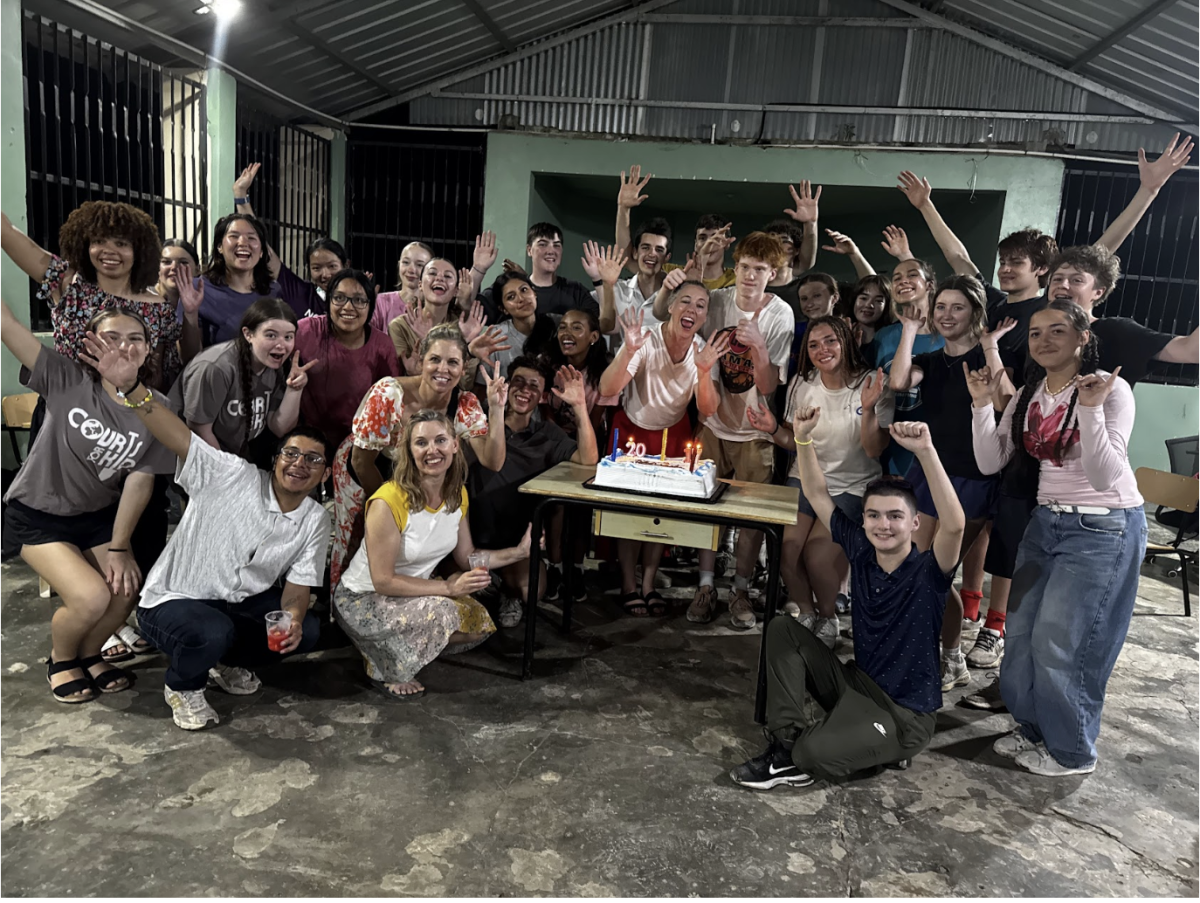


Alixandra Coker’s Forensic Science class takes a field trip to the Washington State Patrol Forensics Building every two years. Students get to observe what it is like to work in a Forensics Lab.
Coker explains what students get to learn about when they go to the lab.
“They showed students how to analyze drug samples and unknown substances from a crime scene and traffic stops,” Coker said. “We got into the ballistics lab, where they test firearms from crime scenes.”
At the lab, students get to walk through the ballistics lab, which gives students an interactive learning experience.
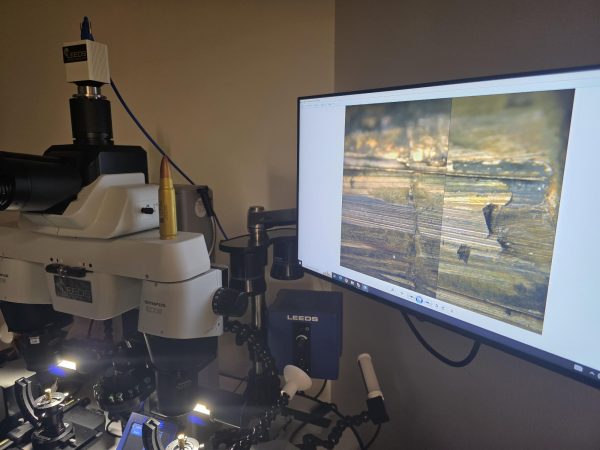
“The ballistics lab was the highlight for most students because of how hands-on it is,” Coker said.“Students were allowed to walk through more of the lab, and the scientists were able to be more involved with the students. The scientists showed the students how to use the microscopes that are in the lab.”
According to Coker, students also got to learn what paths and classes they should take in college if they wanted to pursue forensic science.
“[The staff and Scientists] talk about how to get involved if students want to become a forensic scientist,” Coker said. “They talk about internships that they offer for juniors and seniors in college, and how to get involved more. Some students even got their business cards for connections.”
Olive Krysak is a junior at Camas High School (CHS), and she shared what she was most looking forward to regarding the field trip.
“I was looking forward to seeing the firearms division that they have,” Krysak said. [In that division] they take custody of firearms and the bullets that were used and try to connect a story and visualization of what happened to match it up with what was found at the crime scene.”
At the crime lab, there are a variety of things to study. To Krysak, the room that held all of the bullets from crime scenes was the most interesting.
“I found it very interesting that they had a separate room where they actually shoot bullets out of the guns they have confiscated,” Krysak said. “In that room, they had a three-foot deep water tank to safely retrieve the bullets, a long tube of cotton slabs for the same use, and a large rubber wall mostly used when they aren’t actually needing the bullet.”
Krysak gave an overview of what she and her group did while at the lab.
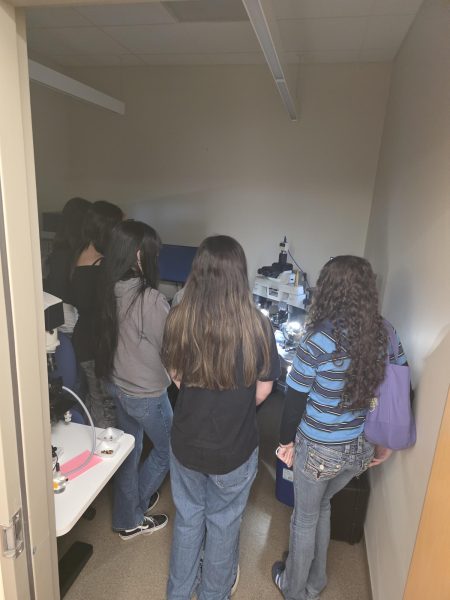
“We started out by dividing the group into two smaller groups. One was taken to watch a presentation, and the other was given a tour of the building,” Kyrsak said. “I was a part of the first tour going on. The first thing we did was walk into the main area for sample drug testing. One of the scientists explained the inner workings of the machines and how to use them, which was cool.”
There are multiple machines at the lab, but one was especially memorable for Krysak.
“One of the machines I remember the guide mentioning was the spectrometer, which uses light and color to identify a substance,” Krysak said. “The sample is put in the machine, and a diamond is then pushed onto it, and light is shown. It was very interesting to hear about.”
Amelia Chamberlain is a junior at CHS, and she shared what she was most looking forward to.
“I was looking forward to learning about their everyday job and what they do on a daily basis because I had an understanding of what they did, but actually being inside the building and seeing how they handle things interested me,” Chamberlain said.
Krysak was not the only student interested in the ballistic lab; Chamberlain shared how large and compelling the ballistic lab was.
“They have one of the biggest gun inventories in Washington,” Chamberlain said. “They said they could hold up to 2000 guns, and I think they have around 800 right now.”


