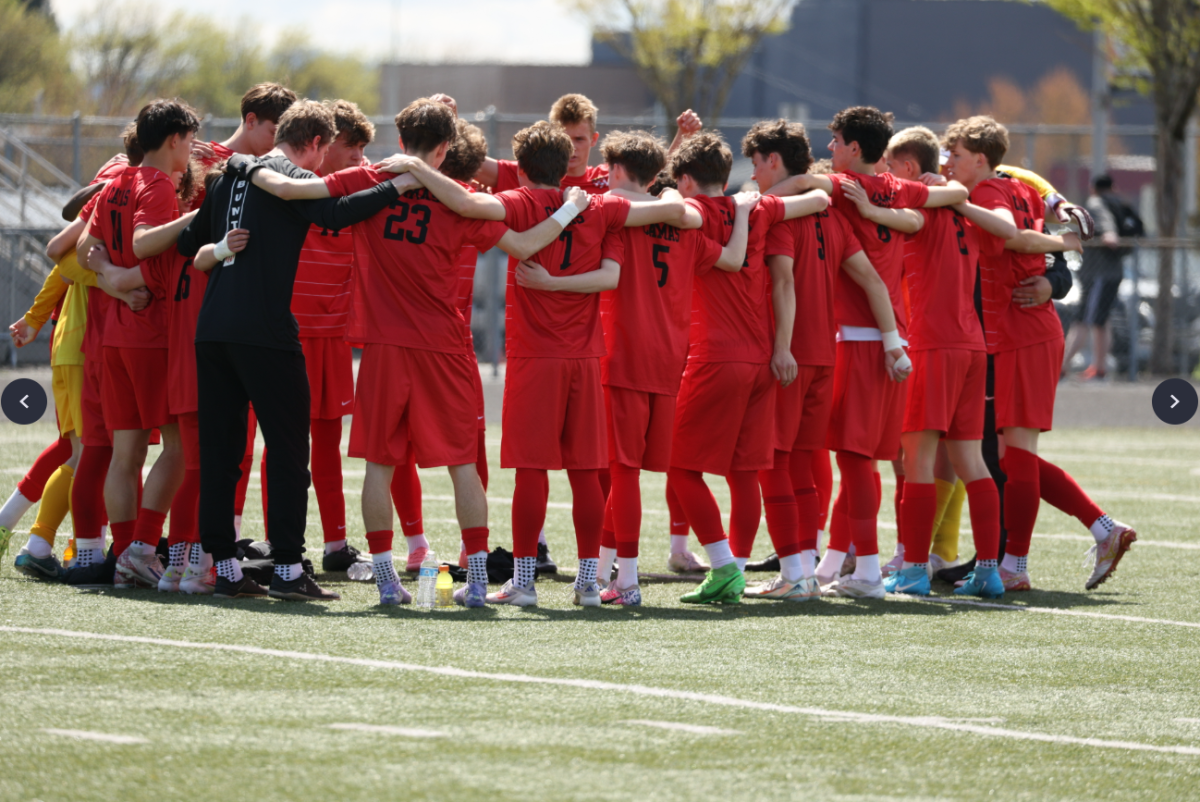










At Camas High School (CHS), soccer has always been competitive. This year, that level of competition is even more noticeable.
The boys soccer program went from two teams to three teams last year, but it returned to two teams this season. The change is based on participation numbers and Title IX requirements. This year, more students turned out for baseball, so baseball got three teams while the soccer team was reduced.
“With only so many roster spots, we had to make cuts,” Athletic Director Stephen Baranowski said.
With fewer spots available, more players were left without a team this year. The large middle school and club programs in the area feed into a smaller high school program. This funneling down can lead to many players being cut or not placed on to the teams they expected to be on.
“Soccer is also a sport where many students play club,” Baranowski said. “There are only two boys teams here, so there is a funnel at the high school level.”

Some athletes are choosing different paths. Senior Fletcher Campbell decided not to continue with soccer after not making the team he wanted.
“I decided my time would be better utilized on track,” Campbell said. “I thought I would have more fun.”
Others are staying involved in soccer in different ways, including recreational leagues or training independently.
“Rec soccer is a good way for athletes to play their sport without having to commit a lot of their time and effort,” senior Aedan Garling said.
Tryouts are another reason the CHS soccer programs feel so competitive.
“Soccer tryouts are really competitive,” junior Elliott Defore-Poe said. “Everyone there wants to be on varsity.”
Even when players are not cut, they may be placed on teams they did not expect.
On the girls’ side, the experience is slightly different. There are more teams, which means fewer cuts, but the expectations remain high.
Senior and former CHS player Sarah Oulman said the intensity of the program eventually affected her experience.

“It’s really competitive because there are so many people,” Oulman said.
Fitness testing and year-round training add to the pressure. Due to this pressure, some players choose club soccer instead, where the environment can feel less stressful.
Despite this, many students still see the competitiveness as a positive because it sets CHS varsity teams ahead of other schools.
“From what I have seen and heard, it is more competitive than other schools,” Garling said.
Even the decreasing number of teams seems positive to some students.
“It fosters a more competitive atmosphere, and it ultimately benefits the team because it will filter out players who aren’t the best for the team,” Campbell said. “It makes a team have higher effort and shows who does and doesn’t want to be there.”
As participation numbers change, the structure of the program may continue to shift. Now, soccer at CHS remains competitive, but whether this is a good or bad thing is still up to players to decide.