








Ironman triathlons have existed since 1978, with the organization’s first race originating in Honolulu, Hawaii. These long-distance triathlons consist of swimming, biking, and running, for a total of 140.6 miles, helping build resilience and confidence.
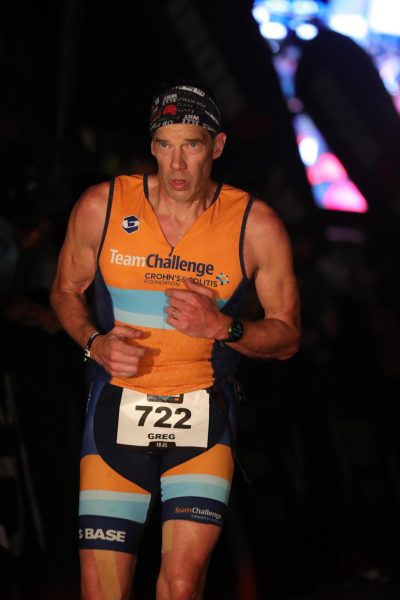
Greg Plitt, who teaches both United States History and Advanced Placement Comparative Government at Camas High School (CHS), shared his experiences throughout his Ironman journey and how it has changed his life.
“[I have a] friend who lives in the Philippines, he runs an organization that [helps get] girls out of sex [trafficking],” Plitt said. “He called me on the phone one day and said [that he was] going to do [an] Ironman China, [and asked me to join him to] raise money for the orphanages. [In total, we raised 17k,] and that paid for 113 girls to go to school and [their] food and health care.”
Plitt entered his first Ironman at the age of 40 out of a desire to help people. However, despite the benefits, Ironman has been a heavy burden on everyone involved in Plitt’s life and requires significant commitment.
“[My family] was really for it at first,” Plitt said. “But then my [wife said], are you going to do this all the time? It’s a huge commitment, you have to get your family involved and count the costs, and realize [how hard it is] going to be on you, your family, and your body.”
Not only is it a huge commitment to those involved, but it takes an immense amount of discipline to participate in these long-distance races. This includes plenty of nutrition planning and training.
“If you get your [nutrition] wrong, you’re going to be in the bathroom all day and throw up all the time. You see people on the course [who] make that mistake, it’s no fun, I’ve been there,” Plitt said. “Training your body both athletically and nutritionally is really important.”
This past October, Plitt took part in his final Ironman race in Sacramento, Calif. A couple of weeks prior to running the race, Plitt injured his hamstring while training, severely impacting his ability to run and bike. Despite his injury, Plitt finished the race in 12 hours, 53 minutes, ranking 1240 out of more than 3400 athletes.
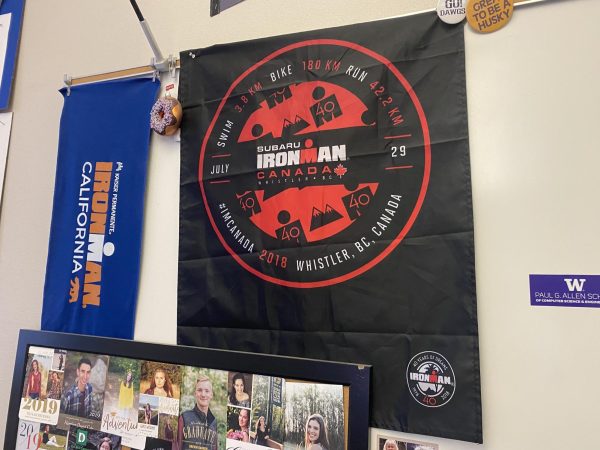
After Plitt entered his final Ironman, he detailed his experiences to his classes and the struggles he faced throughout it, hoping to invoke change in those around him. Before leaving for the race, Plitt told his students he worried his injury would force him to quit. Plitt was happy to report his success and returned to school with a long speech about triumphs, tribulations, and the importance of setting goals. Many students felt moved by Plitt’s Ironman speech, especially the athletic crowd who already participate in several sports.
“The Ironman speech [he gave in class] definitely inspired me,” CHS senior Aarnav Krishna said. “Being a swimmer myself, [I see Plitt as the] ultimate pinnacle of an athletic person. The fact that he did it while still being a teacher for many years is really inspiring, and hearing all his stories afterward was even better.”
“I feel like I can [now] do an Ironman in like 20 years,” CHS senior Genova Michelson said. “[Or maybe more like] 50 years and I’ll be ready. [And I also learnt that you shouldn’t] tear your hamstring.”
“I feel like I’ve inspired a lot of people to do it,” Plitt said. “I try to inspire people to be healthy.”
Outside of athleticism, Plitt also shared some lessons he has learnt from his participation in Ironman, which will be with him for life.
“Life is a race, and we’re all running after the goals we’ve set for ourselves,” Plitt said. “You can do anything you set your mind to, but I taught myself how to work hard, and I think that applies to everything.”
Even if Plitt’s Ironman journey ends now, there is always more awaiting him, and the grind never stops.
“My next challenge is that I’m going to learn how to timber frame and build a huge barn like the old Amish used to do,” Plitt said. “Hey, if I’ve done an Ironman, I can do just about anything.”
