


The Crucible by Arthur Miller
The Crucible by Arthur Miller is a staple of Camas High School’s (CHS) English 11 classes. In an allegory for McCarthyism, Miller builds a world that is ruled by mass hysteria and weaponization of fear. Whether viewed through the lens of the 1692 Salem witch trials where the story is set, or the Red Scare in 1953 when the play was written, Miller effectively exposes the ways panic spreads and has the potential of paralyzing communities.
However, for all its political analysis, the troubling part of The Crucible is where it assigns blame. Colonial Salem, Mass. is a setting brimming with social hierarchy and authority figures, yet Miller instead writes a teenage servant girl — Abigail Williams — as the catalyst of evil. Miller’s choice overlooks the social structures of Salem that actually allowed the witch trials to take place, making the play feel unrealistic and misleading.
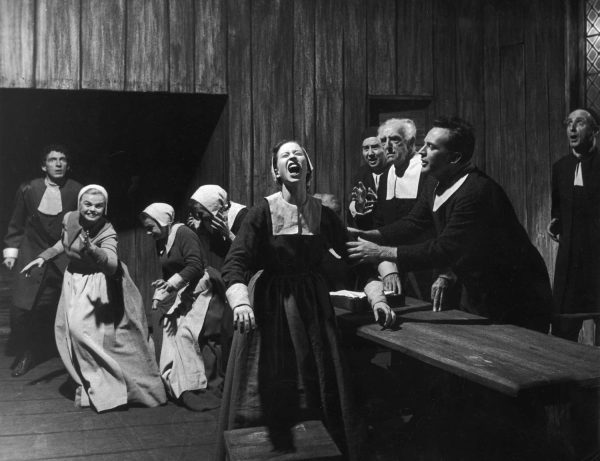
That does not mean Abigail is an innocent character. Her manipulation, threats — “I will bring a pointy reckoning that will shudder you” — and apathy at letting townspeople hang are definitely harmful. But Miller’s choice to frame Abigail and the other accusers as jealous, vengeful girls reduces their motives to personal drama. Historically, the accusers were often powerless individuals whose testimonies were amplified by clergy and property-owning white men. Those were the people with actual authority to turn fear into executions.
Even though The Crucible is fiction and does not need to be entirely accurate to the real events Miller based it on, the play ultimately does shape how audiences view the history it references. When dynamics are watered down or changed drastically for the sake of a more compelling narrative, it distorts the very systems it intends to critique.
In contrast to Abigail, John Proctor is placed on a pedestal. His flaws are acknowledged, but they are used to portray internal struggle rather than clear villainous acts.
Yet, Proctor is not a fundamentally good person who is simply burdened by mistakes. He is a grown man who engages in an adulterous relationship with his 17-year-old servant. While Abigail is condemned as the corrupter, Proctor becomes the moral center of the play and later finds “his goodness” in becoming a martyr. It is Proctor that the audience is encouraged to sympathize with, and — in an outstanding example of recency bias — his final act of morality somehow overshadows his role in creating the conflict.
This imbalance matters because The Crucible is meant to critique McCarthyism — a period in the 1950s when an overwhelming fear of communism resulted in people being accused of being communists with little or no evidence. On the surface, it seems as if the girls screaming “witch” is a perfect parallel to these baseless accusations. But what the analogy gets wrong is the fact that McCarthyism was only made possible by an abuse of institutional power.
Sen. Joseph McCarthy and other authority figures at the time were the ones who weaponized fear. In Salem, it was Judge Danforth’s rigidity, Reverend Parris’ self-preservation, and the theocratic system itself that turned accusations into mass panic and executions. The crisis was a systematic failure, not the result of one wicked girl.
Blaming Abigail results in dramatic storytelling, but it also lets the authority figures — and the systems they represent — off the hook. It is easier for audiences to condemn a teenage girl than confront the truth that it was the town’s respected leaders that tried, sentenced, and hung the innocents.
Despite its flaws, The Crucible is still relevant in that it exemplifies a willingness to find easy targets and the speed with which people can be swept into a “witch hunt.” It also asks audiences an important question about credibility: Who is believed and who is dismissed?
But ultimately, the play critiques one form of scapegoating while participating in another. It is a play about misuse of authority and the dynamics of power, yet loses sight of its own message. Even so, with accurate historical contextualization and discussion of social hierarchies at the time, it can still hold an important place in English classrooms by prompting students to reflect on how narratives shape our understanding of blame, responsibility, and fear.
Frankenstein by Mary Shelley
Frankenstein was written by Mary Shelley at only 18 years old, the same age as many CHS students when they read it in their senior year English class. Its prevalence in popular culture is often reduced to a caricature of a green monster with bolts in his neck, but there is so much more to its cultural perseverance. Shelley blends gothic horror with questions that are still relevant in an age defined by technology and innovation.
Even two centuries later, what makes Frankenstein so compelling is the way Shelley dismantles the idea of what a “monster” actually is. The creature, though terrifying in appearance, is not the monster audiences too often assume him to be. In Victor Frankenstein and the creature’s first moments, Frankenstein refers to him as “the miserable monster whom I had created” before the creature has done anything deserving of being called monstrous.
Frankenstein’s immediate reaction of revulsion to his creation is a choice that makes audiences become suspicious of Frankenstein’s judgment, rather than the nature of the creature.
Throughout the entire novel, the creature is never even named, a choice by Shelley that goes to show the ease at which someone can be dehumanized when no effort is made to get to know them. Today, the creature is often incorrectly labeled as “Frankenstein,” an almost poetic mistake where Victor Frankenstein’s name is associated with his shameful invention and the creature is never deemed worthy enough to have a title that is his own.
As the tragedies of the novel unfold, Shelley inverts the roles of monster and man from what would be expected. The creature becomes more articulate and thoughtful — painfully aware of his isolation — while Frankenstein becomes increasingly consumed by pride and irrationality.
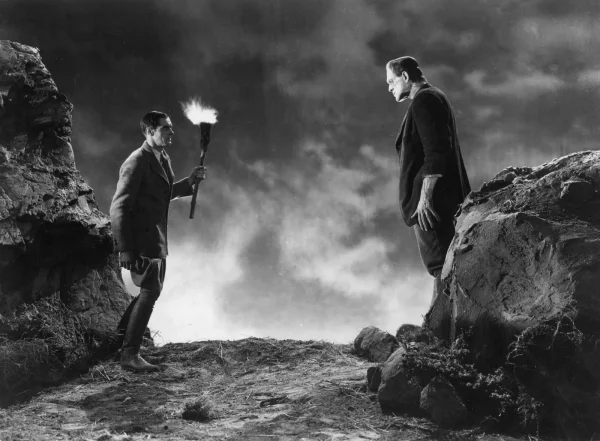
Shelley’s prose can be flowery and ornate at times, but it conveys a level of intensity that is the unraveling of both the creator and his creation.
This reversal of roles highlights one of the central arguments of the novel: monstrosity is made, not born. Frankenstein is not a stereotypical villain. Instead, he is careless, overzealous, and unwilling to take responsibility for what he created. The traits he embodies are almost more unsettling than a traditional antagonist because it feels familiar. Shelley implies that danger does not lie in scientific progress. The real danger is when scientific progress is made with a lack of accountability and ethics.
That warning is arguably more relevant now than it was in 1818 when it was published. Shelley anticipates ethical dilemmas of today: artificial intelligence, genetic engineering, and rapid technological development with little regulation. The tragedy of the novel is Frankenstein’s lack of guidance or acknowledgement of what he created.
Frankenstein also contains one of the clearest arguments for empathy. The creature’s violence is not innate, but rather shaped by rejection and lack of companionship.
The creature insists, “I was benevolent and good; misery made me a fiend.” Empathy has the power to build humanity, but its absence has the power to destroy it. Shelley’s message is as strong as ever today, when the unfamiliar is too often feared and met with hatred rather than attempts at understanding.
In English classrooms, Frankenstein challenges students to look beyond typical hero and villain dynamics and figure out what actually makes a monster. It challenges students to think about who bears the consequences of creation. It is a reminder of how literature should not be confined to its era when it has the potential to speak across centuries.





Jim • Nov 27, 2025 at 1:52 PM
Another great article, which I needed to read several times to better understand a number of messages contained in it. I have called out several of them for further reflection.
Thanks you & “keep ’em coming”, Elly
*Shelley anticipates ethical dilemmas of today: artificial intelligence, genetic engineering, and rapid technological development with little regulation.
*Empathy has the power to build humanity, but its absence has the power to destroy it. Shelley’s message is as strong as ever today, when the unfamiliar is too often feared and met with hatred rather than attempts at understanding.
*Historically, the accusers were often powerless individuals whose testimonies were amplified by clergy and property-owning white men. Those were the people with actual authority to turn fear into executions.
*When dynamics are watered down or changed drastically for the sake of a more compelling narrative, it distorts the very systems it intends to critique.
*Despite its flaws, The Crucible is still relevant in that it exemplifies a willingness to find easy targets and the speed with which people can be swept into a “witch hunt.”
*Frankenstein by Mary Shelley – monstrosity is made, not
Cliff Mueller • Nov 26, 2025 at 8:55 PM
Awesome analysis Elly. I struggled in High School to write mediocre book reports.
Jill Eisenberg • Nov 26, 2025 at 5:19 PM
A great piece of writing!